

Long before humans developed packaging for their needs, nature had its own methods to store and protect goods. Today, not only does modern-day packaging mimic nature, but nature is still a vital ingredient in packaging materials.
Think of the banana. Its outer peel is inexpensive, lightweight, non-toxic, and protects the product — all desirable qualities in packaging.
The eggshell is another good example. The hard, outer covering, which is composed of calcium carbonate, provides protection for the egg inside and plays a role in gas and water exchange. The thin outer coating of the shell also helps prevent bacterial contamination.
Likewise, the inedible hard outer shell of the nut covers and protects the kernel inside.

Packaging – the coordinated system of preparing goods for transport, distribution, storage, retailing, and use – was developed early by man. Primitive people needed a way to contain and carry food, water, and possessions. This came from nature in the form of a wrap of leaves, nut shells, gourds, hollow wood, or animal skin.
Glass was discovered about 2500 BC, and the earliest hollow glass objects, like a bottle, appeared in about 1500 BC. Glass is a packaging material that originated in nature and is still widely used today.
It is documented that metal, found in nature, was first used as packaging in 1200. The first metal used for packaging was tin, and it is one of the most abundant modern-day packaging materials.
Paper was created about 105AD from the inner bark of mulberry trees. Centuries later, the Chinese invented paper made of matted plant fibers. From there, the cardboard box was invented during the 15th century.
Paper and subsequently cardboard continue to be a vital part of the packaging world today.
The first plastic was made in 1856 from cellulose, which is a natural polymer found in the cell walls of plants. Plastic is perhaps the most widely used material in modern packaging.
The majority of plastic bags today, though, are not made of natural material. Instead, a “film” or thin flexible sheets of plastic created using polyethylene is used.
The first fully synthetic plastic was invented in 1907. It marked a historical turning point because it was the first time a plastic was created entirely from artificial components and not derived from nature.
But man continues to look to nature for packaging solutions, mainly searching for more eco-friendly alternatives.
In 2024, Dr. Nasim Amiralian developed a process to turn sugarcane waste into packaging that also keeps food fresher longer than regular plastic.
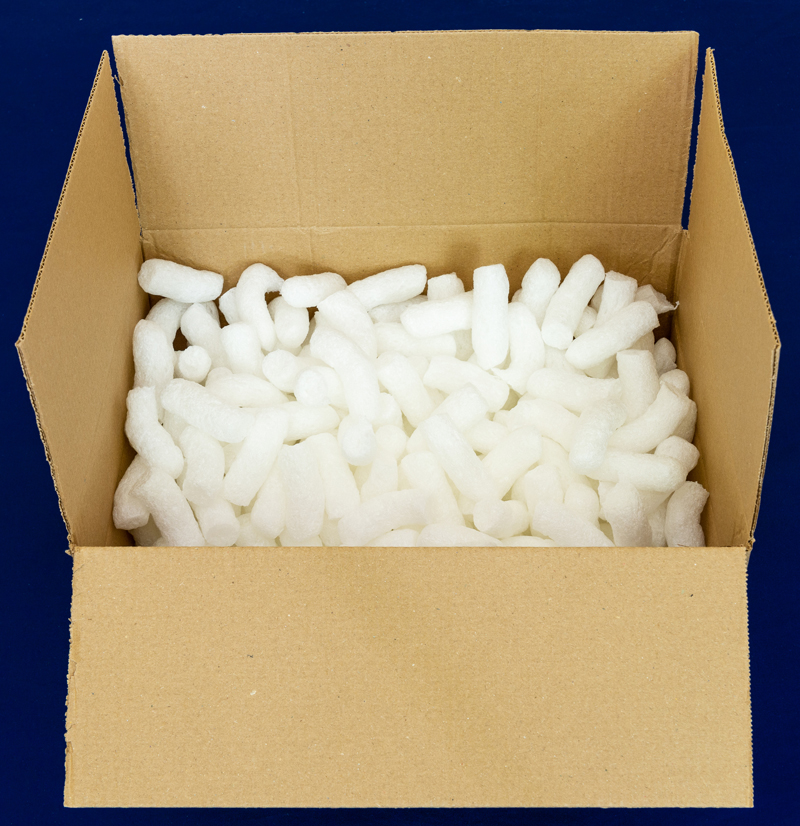
Some packaging peanuts, typically made of synthetic Styrofoam, are now being made of biodegradable natural materials like cornstarch or potato starch.
The world of packaging is evolving continually as creators continue to search for better, more sustainable sources. No doubt, nature will always be an inspiration as packaging progresses.
U.S. Packaging & Wrapping offers a variety of high-quality packaging solutions. For your packaging needs, visit our website at uspackagingandwrapping.com or contact us by phone at 1-800-441-5090 or by email at customerservice@uspackagingandwrapping.com.

 Packaging Blog