
Packaging ideas for food should begin with the type of consumable product being packaged, the desired shelf life, and an idea of the end look. In this post, we will look at different food packaging ideas, standard packaging methods, and how each packaging idea can benefit certain products. We will list multiple foods below with ideas for packaging and how many other producers and distributors package certain consumable products.
Candy
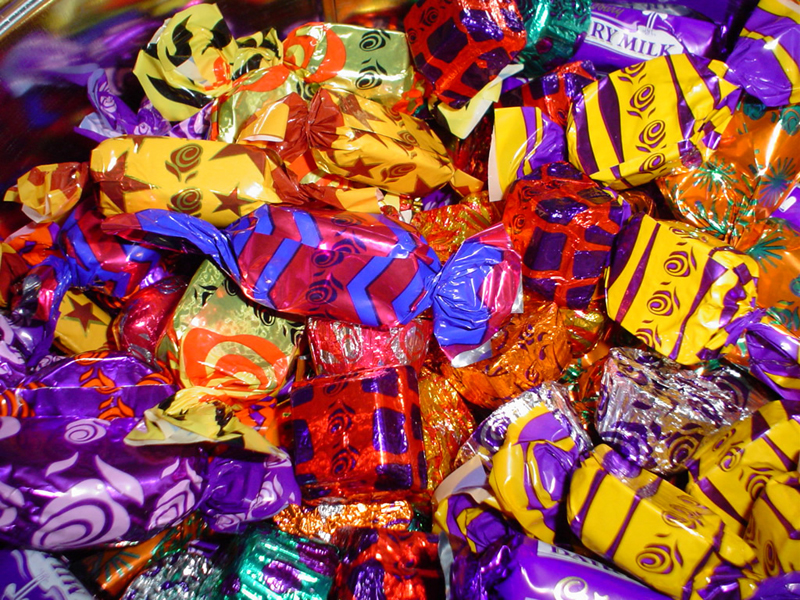
Candies include chocolate, hard, and chewy candies. Anyone selecting from a store is aware of the many choices and styles of packaging for each candy. Hard and soft candies can be found in wax, foil, or cellophane twist packages. For bulk packs, candies are boxed or bagged.
Chocolates can be found in wrappers as well, foil is standard with packaging chocolates as coated paper packaging. For bulk packs, preformed boxes with inserts for the chocolates are used. Once the box is filled, the lid is placed over the chocolates and sealed shut with custom adhesive closures, bagging, or shrink wrapping and labeling. The sealed enclosure ensures customers nothing has been tampered with.
Potato Chips and Snacks
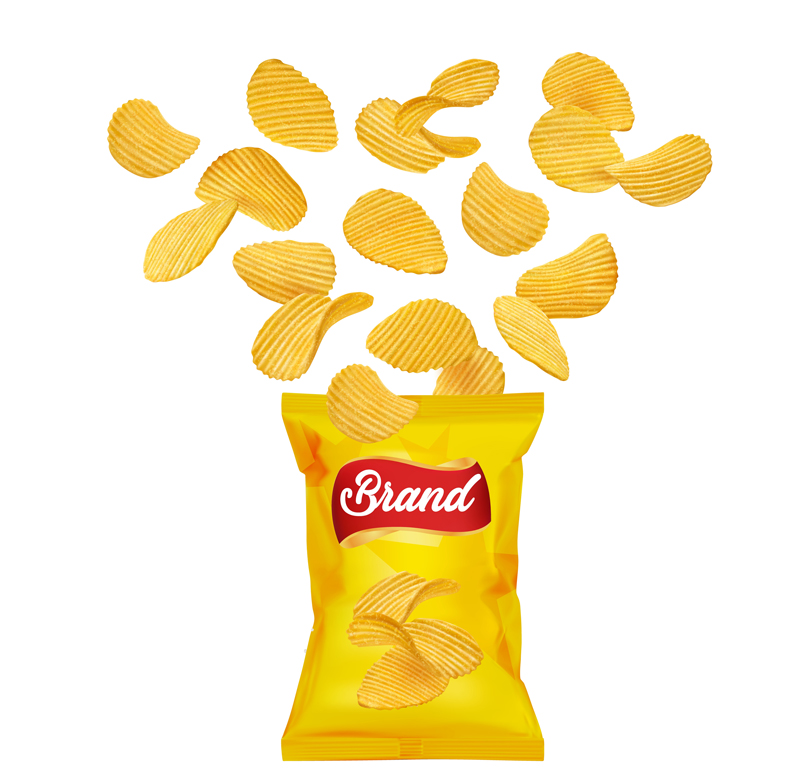
Snacks with corn or grain-based ingredients and potato chips are packaged using an oxygen barrier. Many producers choose flexible packaging with an oxygen barrier to reduce oxygen and moisture. Many flexible packaging options for these consumable items feature a foil interior for barrier properties. Maintaining oxygen and moisture levels will keep the snap in snacks and chips. Rigid snack containers often contain a laminated interior to help with oxygen and moisture control. Rigid containers also protect contents from crushing and crumbling.
Grain Products
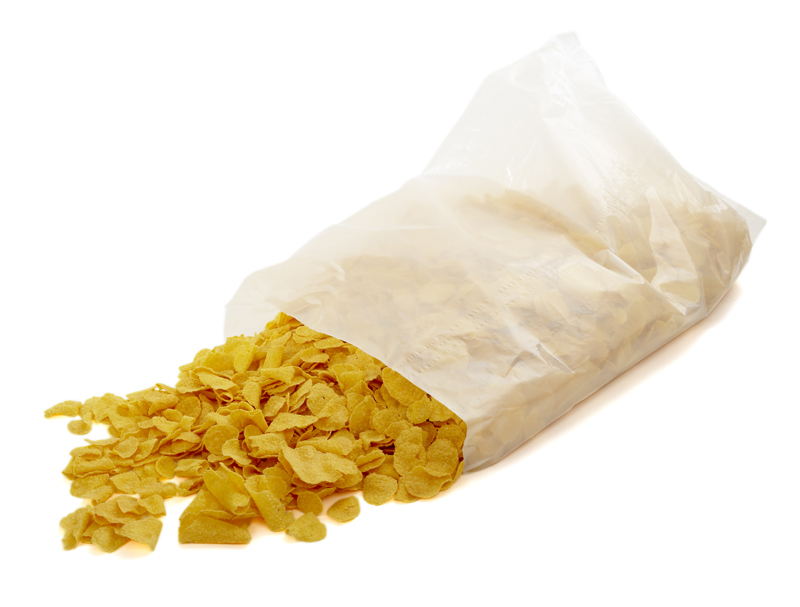
Including cereals, baked goods, rice, and whole grain products, most products have oils that can turn rancid if not stored correctly. Wax or poly-coated flexible and rigid kraft packaging are favorites for controlling oil saturation and grain preservation.
Baked goods are packaged in different materials depending on the product, handling, and desired shelf life. Some baked goods are packaged with flow wrapping, shrink wrapping, poly bags, kraft bags, rigid plastic containers, and more. The desired time from production to the consumer must be determined to adequately preserve the product. Then, suitable packaging can be trialed and adopted.
Fish
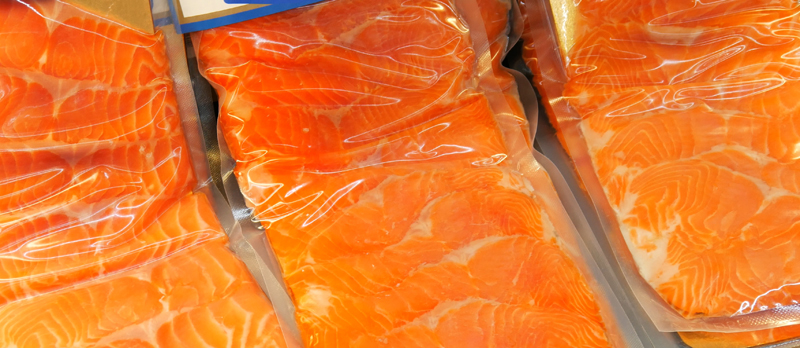
Fish and seafood need to be chilled and frozen quickly once caught. Flash freezing eliminates drying out and spoilage. Once frozen, fish is placed in flexible packaging or on coated cartons and sealed from moisture, oxygen, and freezer burn. This modified atmosphere packaging will help to increase the freshness and prolong the storage life of seafood products. Other cooked seafood is canned or sealed in flexible barrier packaging to eliminate oxygen.
Produce
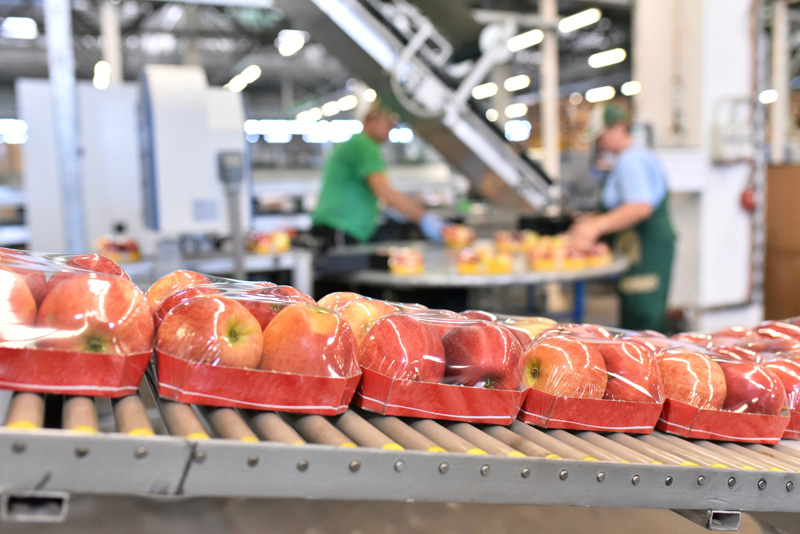
Large bulk bin cartons are used for transporting higher volumes of produce. Once fruits and vegetables are ready for the store shelves, they are placed in mesh bags, flexible poly holders, packaged with an overwrap, or displayed in bulk and placed in a produce bag for take home. Oxygen and light exposure are essential factors when packaging produce.
Canned fruits and vegetables are different from fresh products. Due to bacteria and many other factors, canning requires the correct acidity levels, heat applied, and hermetic sealing to prolong the life of the produce. With safe and regulated kitchens, commercially canning produce will extend the life product’s life and provide an excellent option for excess bits and pieces.
Meat
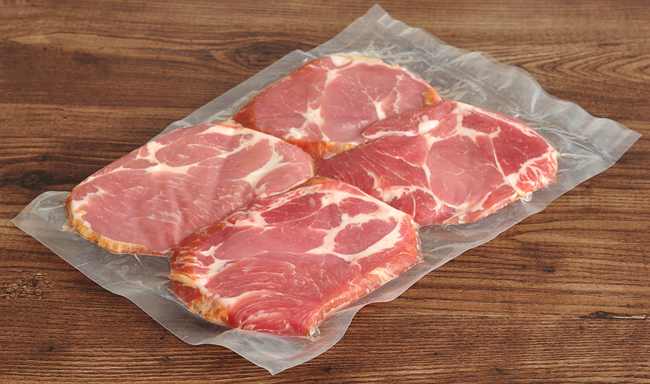
Fresh meat has many packaging options. It is crucial to begin with the type of meat, the size, with or without bones, and how long of desired storage. For large, bone-in primal cuts thicker flexible packaging is used. Red meat is often packaged with vacuum packaging and inert gas. Poultry can use special heat shrink poultry bags to shrink and conform around whole chickens for frozen storage.
Overwrapping has always been preferred for shorter-term meat storage in grocers and butcher shops. For display or transport, materials are inexpensive and protect meat juices from spilling while offering a surface for stickers and labels.
Processed Meats
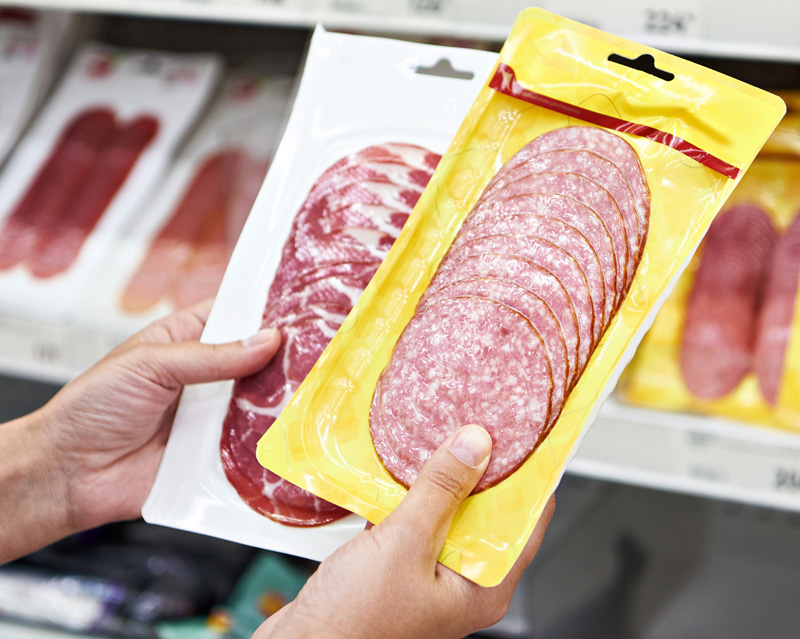
Processed meats have more sodium than raw meats and require little to no oxygen for prolonged storage. Modified atmosphere packaging is required to adequately store and package processed meats. Thermoform packaging is popular because of the oxygen properties and the ability to flush nitrogen or other gases into the package. Light can also cause discoloration to some processed meats, and black or metallic co-extruded materials may be required.
Dairy Products
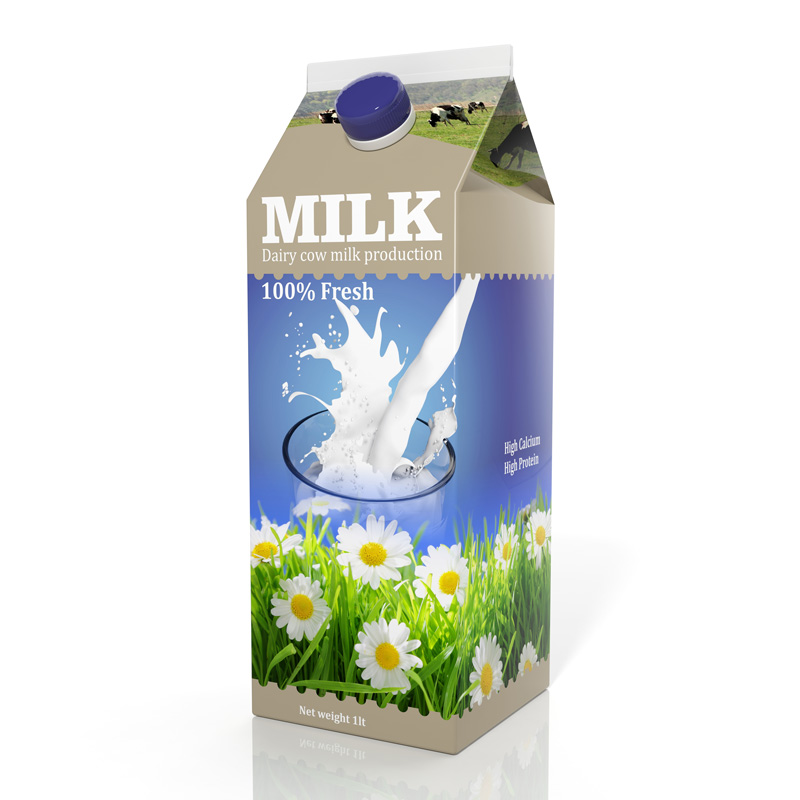
Dairy contains many products, from cheeses and ice cream to milk. Besides ice cream and other frozen dairy products, most dairy items require pasteurizing to eliminate microorganisms. The pasteurization process is done with low heat and requires a high-density container or laminated container. Glass used to be the common packaging choice until coated paperboard cartons and polyethylene became more cost-effective. When placing dairy products into the packaging container, aseptic packaging is used. This ensures not only the dairy product is free of microorganisms, but the packaging and environment during the process is also sterile.
Cheeses and ice cream have different forms of packaging. Cheese packaging can depend on hard or soft cheese. Soft cheeses use foil-laminated materials and thermoformed tubes for packaging to preserve and retain moisture levels. Hard cheese is packaged in barrier shrink bags and other flexible materials with an oxygen barrier. Ice cream is commonly packaged in laminated paperboard or rigid poly tubs.
Spreads – Jellies, jams, peanut butter

Recently, squeezable options have become popular for these products. Traditionally though, glass or rigid plastic containers have been used. Peanut butter and jams have liquids and oils; therefore, the packaging should have barrier properties. Many jams and jellies in glass are still canned under pressure. Squeezable options are available in plastic containers and foil-lined flexible packaging. Check with local and state guidelines before choosing a packaging option.
Beverages
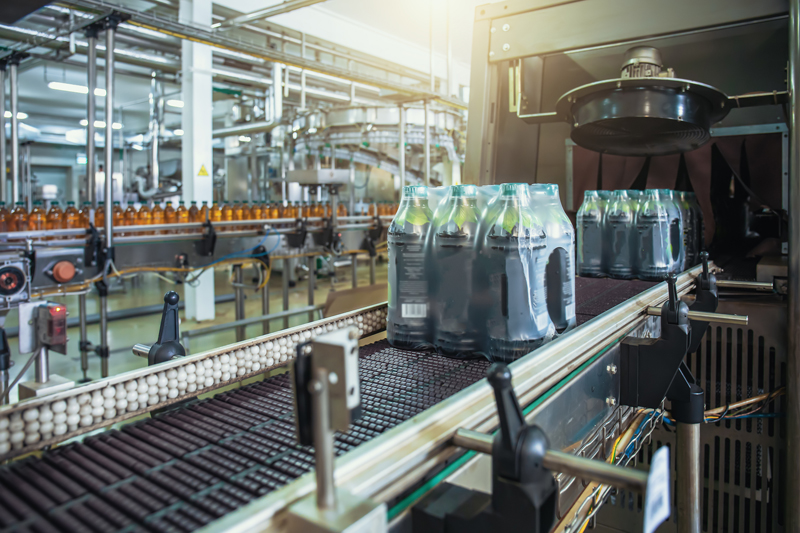
There is a large variety of beverage packaging options, depending on the size and storage of the contents. Carbonated non-alcoholic beverages and alcoholic beverages make up the most considerable quantity of drinks sold. Because of the pressure build-up from contained carbon dioxide, containers must withstand increased pressure. Exposure to light can also discolor or degrade the taste of some beverages. Aluminum cans, glass, and plastic containers package beverages under pressure. Other non-carbonated beverage packaging includes paperboard cartons and plastic containers. For case packaging, flats, and bundling film with a shrink bundler are used to deliver the wrapped cases seen in stores.
Frozen Foods
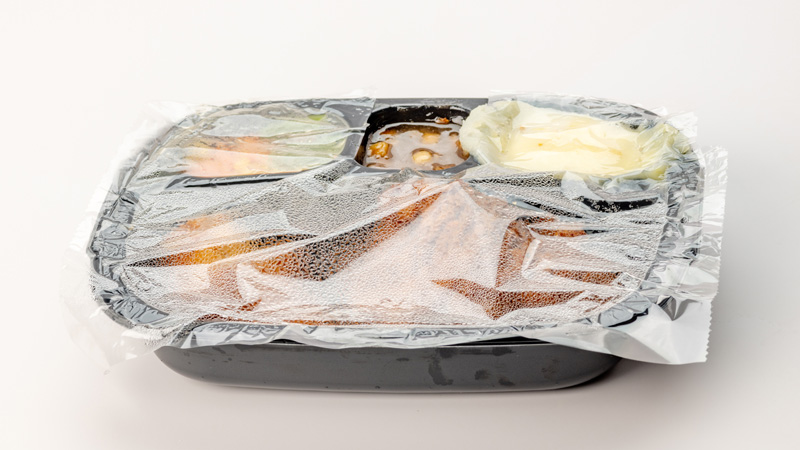
Frozen foods packaging should focus on preventing ice crystals from forming on the product. Flash freezing with the proper packaging helps to prevent large ice crystals (freezer burn) from forming during freezer storage. Frozen vegetables and fruits are often flash frozen, placed in barrier bags, and sealed. Vacuum packaging is often a preferred form of long-term freezer packaging if appropriate. The oxygen reduction within the package helps to reduce freezer burn.
More common these days are pre-made frozen meals. These meals have been precooked and packaged for freezer storage. Metal or rigid poly trays are often used depending on the preparation instructions. Once the frozen product is placed in the tray for packaging, a lip seal will close off the contents from external elements. Other frozen baked goods and pizzas are shrink-wrapped for freezer storage. Depending on the desired storage times, paperboard cartons with wax or poly coating can also be used for frozen baked goods.
Dried Foods
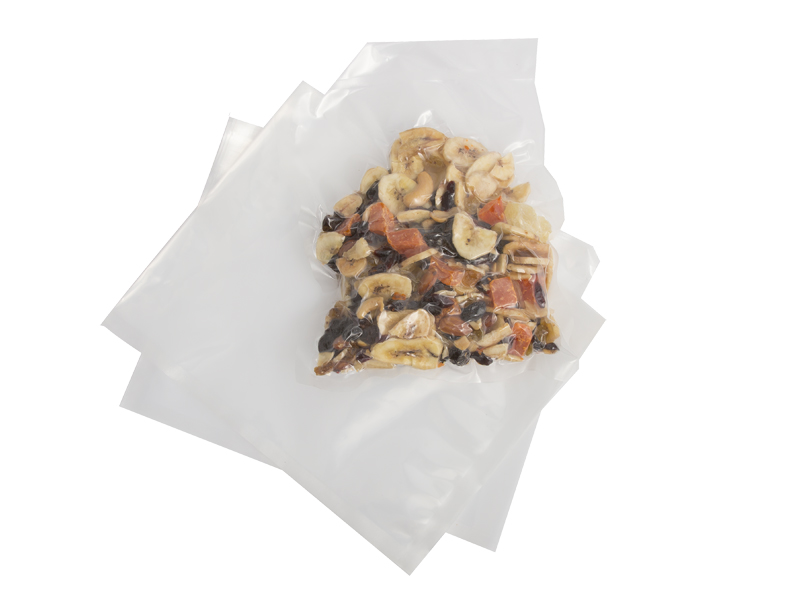
Dried foods come available in many forms of packaging. Popular trail mix packaging includes flexible stand-up pouches with barrier properties or rigid containers. Dried meats can be vacuum packaged or thermoformed to keep contents fresh. Raisins, cranberries, and other dried fruits often come in paperboard cartons or laminated rigid containers.
Conclusion
Packaging ideas for food products are often adopted in the name of preservation and presentation. The preservation of food quality and the longevity of shelf life will impact the type of packaging you choose. These are ideas and common packaging materials and processes used for food items. Many more options are available, and new materials are always coming onto the market as sustainability awareness increases. If you have any questions about packaging your food products, call 1-800-441-5090 or shop online at uspackagingandwrapping.com.

 Packaging Blog